


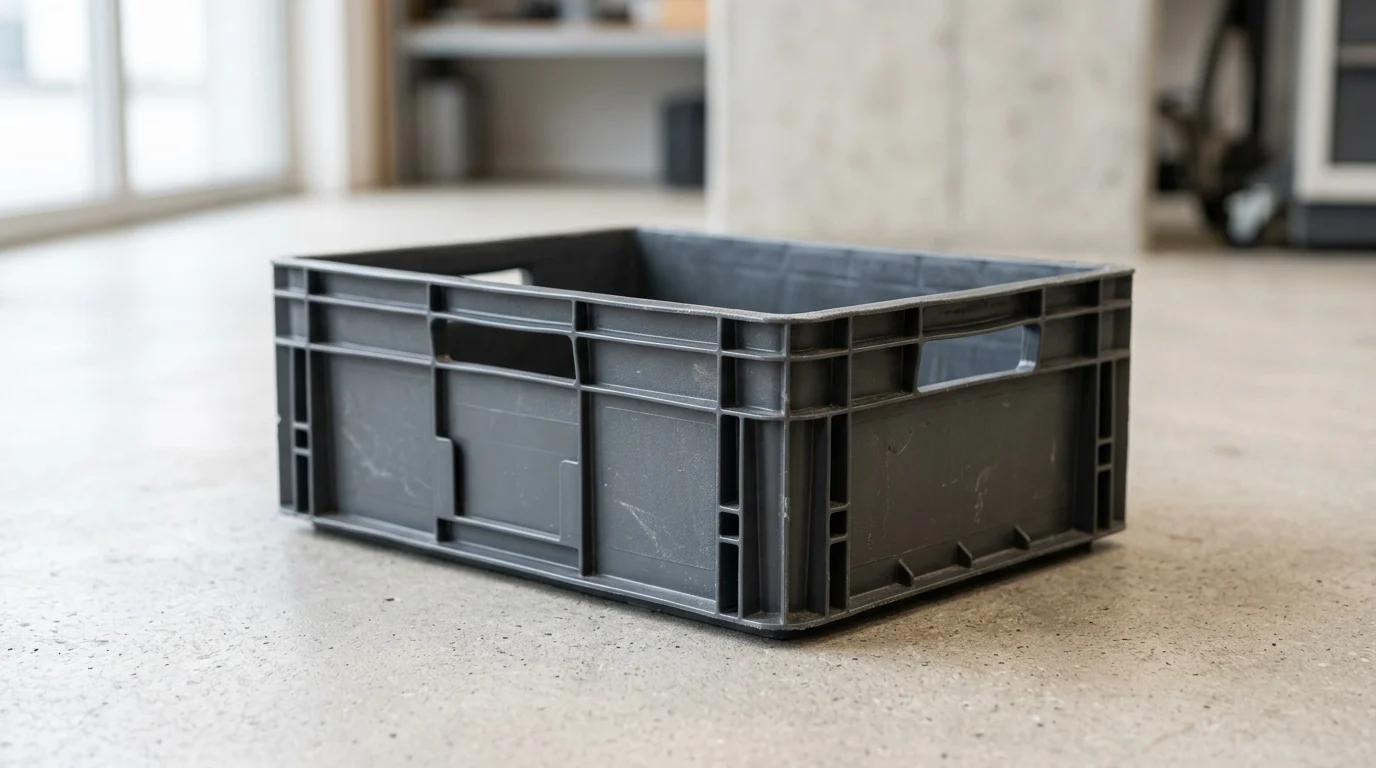
Automotive packaging is no longer a back-office detail; it is a measurable lever for cost, quality, and carbon reduction. As OEMs and Tier 1 suppliers push deeper into JIT and JIS production, even minor variation in parts packaging can slow automation, damage components, or waste trailer space. Reusable small load containers are becoming the standardized answer: engineered handling units that protect precision parts, fit automated systems, and circulate through high-volume supply loops for years. This article examines how these containers create value, which specifications matter most, and why durable, reusable packaging is increasingly central to modern automotive logistics strategy.
Why Is the Small Load Container Becoming Strategic in Automotive
Automotive supply chains are currently facing unprecedented pressure to optimize packaging density, minimize environmental waste, and accelerate material flow from supplier to assembly line. The transition from expendable, single-use packaging to highly engineered, reusable systems represents a fundamental shift in global supply chain architecture.
As automotive manufacturers lean heavily into just-in-time (JIT) and just-in-sequence (JIS) manufacturing methodologies, the tolerance for packaging variability has dropped to near zero. In this rigorous environment, standardizing the physical handling units that move components across continents and through production facilities is no longer just an operational preference—it is a strategic imperative required to maintain competitive margins.
How should a Small Load Container be defined within
Within the automotive sector, a small load carrier is defined as a standardized, reusable packaging unit engineered specifically for the handling, transport, and storage of small-to-medium automotive parts. Established predominantly by the German Association of the Automotive Industry (VDA) under the rigorous VDA 4500 standard, these containers conform to specific Euro-pallet footprints to ensure maximum spatial efficiency.
Standard dimensional footprints typically include 300x200mm, 400x300mm, and 600x400mm, with height profiles ranging from 114mm to 320mm. This strict dimensional uniformity ensures seamless integration into automated storage and retrieval systems (AS/RS), allowing robotic shuttles and conveyor networks to handle the units without the risk of jamming or sensor faults.
Which cost, quality, labor
The adoption of standardized reusable containers directly impacts operational expenditures, product integrity, and workforce ergonomics. Facilities transitioning to standardized reusable fleets consistently report a 15% to 25% reduction in packaging-related labor costs. This reduction is primarily driven by the elimination of the time-consuming processes of box assembly, tape application, and end-of-line cardboard breakdown.
From a quality perspective, the rigid structure of injection-molded polymers drastically reduces part damage. Automotive manufacturers have recorded defect rate drops of up to 12% compared to corrugated alternatives, safeguarding critical, high-value components such as microprocessors, sensors, and precisely machined gears from crush damage and moisture degradation.
Where does the Small Load Container create commercial value
Beyond immediate cost avoidance, the commercial value of these standardized units manifests in supply chain velocity and space utilization. Standardized containers facilitate automated handling, allowing robotic palletizers to operate at maximum efficiency, often exceeding throughputs of 600 units per hour in modern distribution centers.
By standardizing the handling unit, original equipment manufacturers (OEMs) and Tier 1 suppliers achieve a mathematically optimized packing density. This precision increases trailer utilization by up to 20%, effectively removing one out of every five trucks from the road in high-volume loops, thereby driving down freight costs per component and significantly reducing Scope 3 carbon emissions.
What Small Load Container Specifications Determine Performance
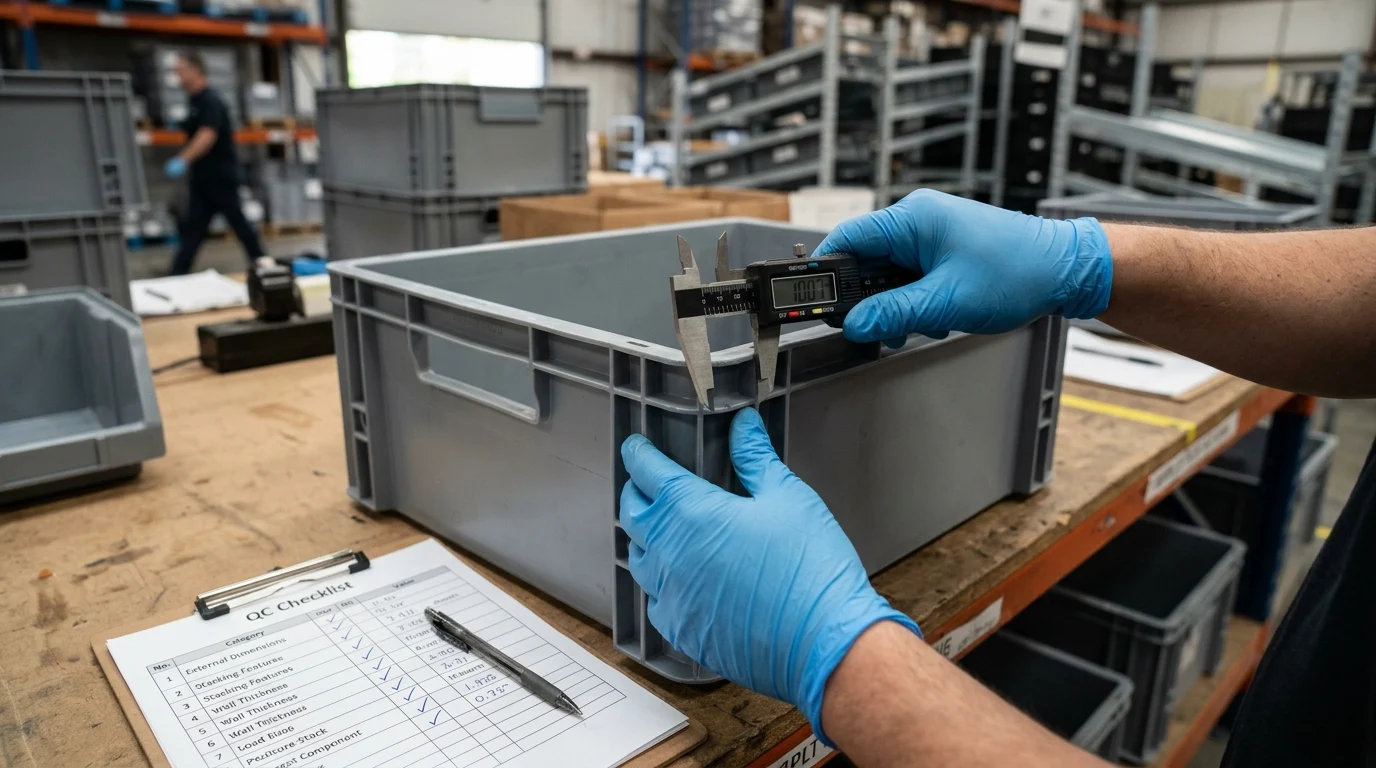
The performance of reusable packaging in rigorous automotive environments is dictated by strict engineering specifications. Every element, from external geometry and ribbing structures to material composition and handle ergonomics, must be meticulously calibrated to withstand years of continuous circulation.
Engineers evaluating these containers must look beyond basic dimensions to understand how dynamic physical properties interact with automated machinery, environmental extremes, and sensitive automotive components.
Which dimensional, stacking, nesting
Dimensional accuracy and structural integrity govern stacking and nesting capabilities within the warehouse and the trailer. Automotive containers must typically support dynamic payload capacities of up to 20 kg per unit, while maintaining static stacking load capacities exceeding 500 kg in high-bay warehousing environments.
While straight-wall containers maximize internal cubic volume for part storage, Nest and Stack Totes provide a critical advantage in reverse logistics. These specialized designs offer empty nesting ratios that can reduce return freight volume by up to 70%. Furthermore, interlocking base designs and reinforced corner columns ensure pallet stability during transit, preventing catastrophic load shifts under braking forces that can reach up to 0.8G on commercial highways.
How do material choices, electrostatic control, cleanliness
Material science is central to container longevity and component safety. The majority of automotive carriers are injection-molded from high-impact polypropylene (PP) or high-density polyethylene (HDPE). These polymers are engineered to endure extreme temperature fluctuations, maintaining structural integrity from -20°C in winter transit to +60°C in summer warehouse conditions without embrittlement or warping.
For the transport of electronic control units (ECUs) and sensitive infotainment modules, electrostatic discharge (ESD) control is mandatory. ESD-safe containers incorporate conductive carbon additives to maintain a surface resistance between $10^4$ and $10^9$ ohms, safely dissipating static charges before they can arc and destroy microcircuitry. Additionally, cleanliness standards demand smooth internal surfaces and drainage holes to facilitate high-pressure washing at 65°C, ensuring the removal of machine oils and particulate matter between trips.
When should dunnage, dividers, lids, labels
The external polymer shell provides primary structural protection, but the internal configuration dictates the ultimate safety of the parts. Custom dunnage—such as expanded polypropylene (EPP) inserts, vacuum-thermoformed trays, or brushed textile dividers—is deployed to prevent part-to-part contact, mitigate vibration transfer, and hold parts in precise orientations for automated robotic extraction.
Lids and robust labeling systems are equally critical. Drop-on or hinged lids ensure that parts remain free from dust and particulate contamination during extended storage. Integrated label holders, Kanban card clips, or textured zones for easily removable adhesive labels ensure that strict lot traceability is maintained without leaving sticky residues that degrade the container's appearance and automated readability.
How Does a Small Load Container Compare With Expendable Cartons
Evaluating reusable packaging against traditional expendable cartons requires a comprehensive analysis of both direct and indirect supply chain costs. While corrugated cardboard offers the allure of low initial unit costs and high dimensional flexibility, its lifecycle inefficiencies often compound rapidly over time.
Supply chain leaders must utilize quantitative total cost of ownership (TCO) models to justify the capital expenditure required to transition from a disposable paradigm to a durable, circular asset model.
Which comparison table should evaluate cost per trip, damage
A direct comparison reveals stark differences in durability, cost per trip, and protective capabilities. The operational metrics heavily favor reusable systems in high-volume, continuous supply loops.
| Metric | Corrugated Carton | Reusable Polymer Container |
|---|---|---|
| Average Lifespan | 1 Trip (Occasionally 2) | 5–10 Years (100+ Trips) |
| Dynamic Load Capacity | 5–10 kg | Up to 20 kg |
| Moisture Resistance | Poor (Degrades rapidly) | Excellent (Non-absorbent) |
| Part Damage Rate | 2.5% – 5.0% | < 0.5% |
| End-of-Life Processing | Recycled / Landfill | Ground and Remanufactured |
This data highlights that while expendable packaging requires continuous repurchase, reusable assets amortize their initial cost over hundreds of cycles, drastically altering the long-term financial profile of the logistics operation.
What are the trade-offs between standardized Small Load Containe
The primary trade-off in moving away from expendable cartons lies in the tension between standardizing operations and maintaining the flexibility of custom sizing. Standardized reusable containers force suppliers to adapt their internal packaging densities to fixed dimensions. This can occasionally lead to suboptimal cube utilization for unusually shaped parts, where a custom corrugated box could be perfectly tailored to the component's geometry.
However, this minor loss in individual cube efficiency is vastly outweighed by systemic gains. The uniformity of standard footprints eliminates the need for complex, mixed-load pallet building. It drastically reduces warehouse sorting times, prevents the crushing of lower boxes in a mixed stack, and allows for the implementation of rigid, gravity-fed flow racks at the assembly line.
How should total cost of ownership account for purchase
Total Cost of Ownership (TCO) modeling must meticulously account for the initial capital expenditure, reverse logistics (return freight), and periodic washing costs. A standard heavy-duty corrugated box may cost $1.50 to $2.50 per unit, while a comparable reusable polymer container requires an initial investment of $8.00 to $15.00.
Factoring in return logistics (approximately $0.50 per trip) and industrial cleaning ($0.20 per trip), the break-even point typically occurs between 12 and 18 trips. Over a conservative five-year lifecycle comprising 100 trips, the reusable system can yield a net saving of $100 to $120 per container slot, representing a massive cost reduction when multiplied across a fleet of tens of thousands of units.
How Can OEMs and Suppliers Manage Reusable Small Load Container
Deploying a fleet of reusable containers introduces the inherent complexities of asset management. Unlike expendable packaging which requires only outbound tracking, reusable systems demand continuous, bi-directional visibility.
Without stringent tracking protocols and precise loop optimization, the financial and environmental benefits of reusable packaging can be rapidly negated by container loss, localized shortages, and the subsequent need for emergency cardboard repacking.
Which practical steps should define loop sizing
Defining the correct fleet size requires precise calculation of the packaging loop to prevent both capital waste and line-down situations. Logistics engineers determine the baseline required container quantity by multiplying the daily part demand by the total supply chain cycle time (which includes outbound transit, supplier storage, production line dwell time, and return transit).
To accommodate demand spikes, transit delays, and seasonal variations, a buffer inventory of 10% to 15% is typically added to the baseline calculation. Undersizing the fleet risks catastrophic production halts and necessitates expensive premium freight, while oversizing ties up unnecessary capital and consumes valuable warehouse footprint.
How can barcode, RFID, or IoT tracking improve Small
Asset visibility is paramount to preventing fleet shrinkage, which historically averages 3% to 5% annually in unmanaged systems. Modern automotive operations utilize high-contrast barcode scanning, passive UHF RFID tags, or active IoT trackers to monitor container movements in real-time.
RFID integration allows portal readers installed at dock doors to register hundreds of containers simultaneously with up to 99.9% accuracy. This granular data enables logistics managers to identify network bottlenecks, enforce return compliance among Tier 1 and Tier 2 suppliers, and automate Kanban replenishment triggers directly to the ERP system.
Which regional standards, customs considerations
Managing international automotive supply chains necessitates strict alignment with regional packaging standards and regulatory frameworks. While the European market heavily relies on the VDA standard, North American supply chains frequently utilize AIAG (Automotive Industry Action Group) standards, requiring careful translation of dimensions and tolerances when designing global platforms.
Furthermore, cross-border pooling systems must navigate complex customs considerations. Reusable containers are classified as returnable transport equipment (RTE) and may require specific documentation, such as ATA Carnets or temporary import bonds, to avoid repetitive duty assessments every time an empty container crosses a national border.
Which Decision Framework Helps Select the Right Small Load Container
Selecting the optimal reusable packaging strategy demands a highly structured decision-making framework. Organizations must harmonize the competing priorities of various internal departments to ensure the chosen system delivers holistic, long-term value.
By moving away from siloed purchasing decisions, automotive manufacturers can deploy packaging solutions that satisfy engineering tolerances, financial constraints, and logistical throughput requirements simultaneously.
How should engineering, purchasing, logistics, quality
A successful packaging deployment requires a cross-functional steering committee to establish non-negotiable specifications. Engineering prioritizes part protection, vibration dampening, and dimensional tolerances; purchasing focuses on capital expenditure and unit costs; logistics demands high stacking density, nesting ratios, and handling efficiency; while quality assurance insists on cleanliness standards and ESD compliance.
Only by aligning these departmental requirements can an organization confidently select a Small Load Container that will survive the lifecycle demands without causing downstream friction on the assembly line or inflating freight budgets.
Which pilot-test criteria should validate Small Load Container d
Before authorizing a full-scale fleet rollout, comprehensive pilot testing must validate the container's performance under real-world stresses. Physical validation protocols typically include drop tests from heights of 1.2 meters onto concrete, vibration testing simulating 2,000 kilometers of rigorous road transit (e.g., ASTM D4169 standards), and temperature cycling between -20°C and +50°C.
Additionally, executing a limited, closed-loop pilot with a trusted Tier 1 supplier helps identify unforeseen operational friction. This phase reveals critical human-centric data, such as ergonomic challenges for line-side workers, integration issues with existing gravity flow racks, or difficulties in the automated washing process.
What final decision guidance should help companies balance stand
The final strategic decision often hinges on the financial and operational model: whether to purchase the fleet outright or engage a third-party pooling provider. This decision relies heavily on the predictability of the supply chain loop.
| Operational Strategy | Capital Requirement | Maintenance & Washing | Best Suited For |
|---|---|---|---|
| Direct Ownership | High Initial CapEx | Internal Logistics Team | Closed, predictable, short-distance loops |
| Third-Party Pooling | Operational Expense (Pay-per-trip) | Pooling Provider | Fluctuating demand, long-distance, complex networks |
Direct ownership maximizes long-term ROI for stable, high-volume part numbers running between fixed facilities. Conversely, third-party pooling offers unparalleled flexibility, shifting the burden of asset tracking, washing, and replacement to specialized providers, which is highly advantageous for volatile production schedules or geographically dispersed supplier networks.
Key Takeaways
- Standardize container footprints such as 300x200mm, 400x300mm, and 600x400mm to improve compatibility with Euro-pallets, conveyors, AS/RS systems, and automated handling equipment.
- Use reusable small load containers to cut packaging-related labor by 15% to 25% by removing repetitive tasks such as box assembly, taping, and cardboard disposal.
- Protect high-value automotive parts with rigid injection-molded packaging, which can reduce defect rates by up to 12% compared with corrugated alternatives.
- Optimize trailer loading with standardized containers to improve utilization by up to 20%, reducing freight cost per component and lowering transport-related emissions.
- Evaluate small load container performance by looking beyond size to material durability, ribbing, ergonomic handles, stacking stability, and long-term return-loop efficiency.
Frequently Asked Questions
What is a small load container in automotive logistics?
A small load container is a standardized, reusable packaging unit used to transport, store, and handle small-to-medium automotive parts. Many systems follow VDA 4500 dimensions to fit Euro-pallet footprints, conveyors, AS/RS equipment, and automated production flows.
Which small load container sizes are common in automotive supply chains?
Common footprints include 300x200mm, 400x300mm, and 600x400mm, with typical height profiles from 114mm to 320mm. These standardized dimensions improve pallet density, warehouse compatibility, and automation reliability.
How can reusable containers reduce packaging labor costs?
Reusable small load containers can reduce packaging-related labor by 15% to 25% by eliminating box assembly, taping, cardboard breakdown, and excess waste handling. They also simplify standardized picking, stacking, and return-loop operations.
Do small load containers help reduce part damage?
Yes. Rigid injection-molded containers protect precision parts from crushing, moisture, and handling stress. Compared with corrugated packaging, some automotive operations have reported defect rate reductions of up to 12%.
Why are standardized containers important for JIT and JIS production?
JIT and JIS systems require predictable material flow and minimal packaging variation. Standardized containers help prevent line-side disruptions, support automated handling, and ensure parts arrive in the correct sequence and condition.